


Human Rights Dialogue
Valuing Each Person with a Stake in Our Business
to Build a Sustainable Supply Chain
As global demands regarding human rights increase, companies are expected to conduct responsible business activities not only internally but also across their supply chains. The construction industry in particular conducts business in collaboration with a wide and diverse range of partner companies and relies on a diverse workforce, including migrant workers. As such, effectively addressing human rights issues for everyone involved in the business is a key concern. The Obayashi Group also recognizes that the multilayered supply chains make it more difficult to identify human rights issues at the lower tiers of the supply chain.
For this dialogue, we invited Mr. Shoichi Ibusuki and Mr. Ryusuke Tanaka to exchange views with Shigeru Edatsune, Senior Managing Executive Officer of Obayashi Corporation and chair of the Supply Chain Management Expert Committee, and Koji Furuse, Managing Executive Officer of Obayashi Corporation and chair of the Human Rights Expert Committee. They discussed initiatives to respect human rights, future challenges, and trends in Japan and overseas. Mr. Ibusuki is an attorney who has long worked to address human rights issues affecting migrant workers and has represented such workers in labor disputes, while Mr. Tanaka works to promote international labor standards in the fields of the Sustainable Development Goals (SDGs) and Business and Human Rights.
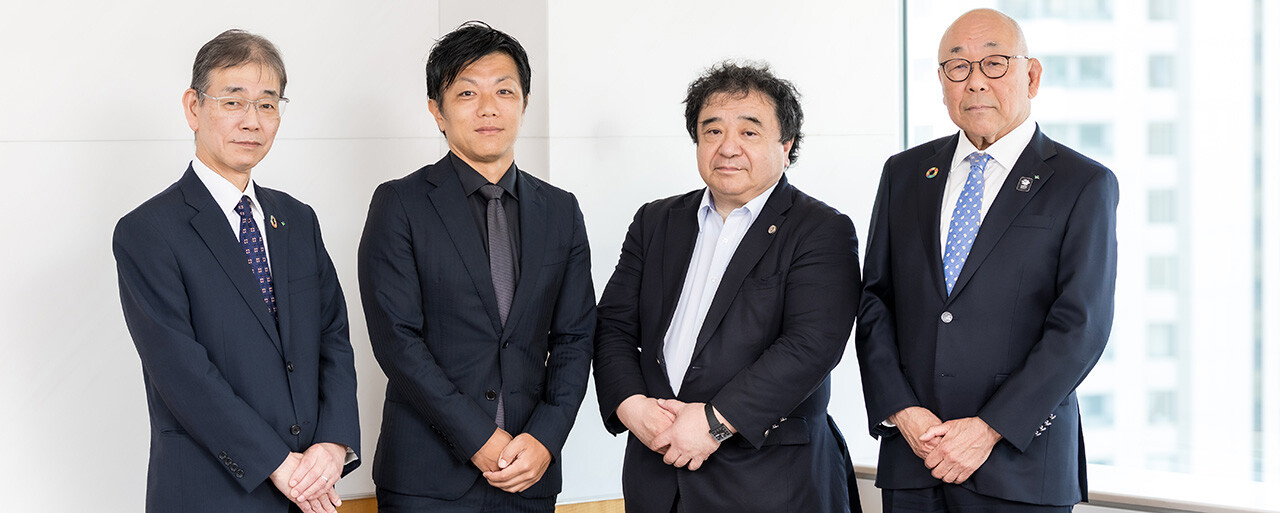
(From the left)
Koji Furuse
Obayashi Corporation Managing Executive Officer
Responsible for Harassment Prevention Department, Legal Department, Human Resources Department, Finance Department, and Accounting Department, and Senior General Manager at Tokyo Main Office (responsible for project administration)
Chair of the Human Rights Expert Committee
Ryusuke Tanaka Programme Officer of ILO Office for Japan Responsible for spreading and promoting international labor standards as a specialist with the ILO Office for Japan. Focusing on the issue of business and human rights, he engages in a wide range of activities, including liaising with the government and with workers' and employers' organizations, providing training and capacity-building programs for companies, and delivering lectures.
Shoichi Ibusuki
Attorney-at-Law
Representative of Lawyers Network for Foreign Workers and Co-Director of the Lawyers' Network for Foreign Technical Interns
Attorney specializing in advocacy for migrant workers' rights. He has handled many cases in the labor and immigration fields and has worked on critical litigation related to protecting the human rights of migrant workers, including a case that led to a court decision acknowledging the worker status of foreign intern trainees.
Shigeru Edatsune
Obayashi Corporation Senior Managing Executive Officer
Head of Procurement Division, Senior General Manager of Civil Engineering Construction Division, and Senior General Manager of Building Construction Division
Chair of the Supply Chain Management Expert Committee
Treating Human Rights as a Management Priority
FuruseObayashi Group's human rights initiatives began with addressing the Dowa Issue.(*1) Over subsequent decades, we have tackled increasingly diverse human rights issues. Right now, we need to address more advanced challenges including human rights risks in global supply chains and the treatment of migrant workers, so we are building comprehensive frameworks to promote progress across the Group.
The Group has various sustainability-related expert committees under the Business Plan Committee, which serves as an advisory body to the president. One such committee, the Human Rights Expert Committee, addresses wide-ranging topics including human rights due diligence, D&I promotion, harassment prevention, and human rights awareness-raising. One distinctive feature of our Groupwide promotion framework is that we work with individual Group companies to discuss human rights issues at the management level and make improvements accordingly.
In terms of human rights education, we provide ongoing training sessions for all employees including those of Group companies in Japan. Level-specific training and new-hire training sessions also incorporate human rights elements.
Obayashi's mission in society is to become a leading sustainability company, as defined in the Obayashi Philosophy. That includes a commitment to value each person with a stake in our business.
Becoming a leading sustainability company implies not only concern for the environment. It also reflects our commitment to respect society as a whole and all our stakeholders.
- *1 human rights issue rooted in Japan's historical social status system. Discrimination and prejudice against people with roots in Dowa districts (outcast communities) remain a human rights challenge in Japan to this day.
TanakaAs Mr. Furuse mentioned, it is extremely important to position human rights as a key management focus and promote groupwide action in this regard.
In today's world, companies are asked not only whether they have a human rights policy, but also whether that policy functions effectively. In industries with many suppliers and migrant workers such as the construction industry, the spotlight is on how to protect human rights by promoting cooperation across the supply chain. In that sense, it is important to find a way to instill the Company's commitment to value each person with a stake in its business right down to the construction site level.
Implementing Initiatives Across the Supply Chain
EdatsuneAs Mr. Tanaka just said, consideration of human rights must extend across the whole supply chain. We place great emphasis on building fair and equal relationships with our suppliers and subcontractors. We also hold regular discussions with the Obayashi Rin-yu-kai suppliers and subcontractors federation and others as part of our drive to reflect the feedback from workers at construction sites in any measures to improve employee treatment and working conditions. It is important to avoid deciding key issues alone as the prime contractor and to make improvements through dialogue with those who are more engaged in construction sites.
The members of the Supply Chain Management Expert Committee, one of the Company's sustainability-related expert committees, come mainly from the procurement division, and also include representatives from the civil engineering, building construction, and safety-related divisions. The committee discusses such issues as how to improve the treatment of skilled workers, handle migrant workers, and enhance working conditions.
Securing personnel into the future has become a major challenge for the construction industry as Japan's labor shortage worsens and its population ages. We have to create environments that make people working on construction sites want to continue working in the industry. It is not just about securing sufficient workers, but about creating an industry that enables people to live and work comfortably and plan their futures.
In FY2025, to address the treatment of migrant workers, we published "Obayashi Group Handbook on Respecting the Human Rights of Foreign Workers." The handbook clearly explains the prohibited actions, compliance requirements, and recommended actions, and also includes references to relevant international guidelines.
We are also expanding the scope of surveys and construction site interviews relating to our CSR Procurement Guidelines from first-tier suppliers to second- and subsequent-tier suppliers. Through these efforts, we are working to gain a better understanding of actual conditions at the lower tiers of the supply chain. With regard to improving the treatment of skilled workers, we place particular importance on ensuring that standard labor cost rates are appropriately reflected in the wages paid to people working at construction sites, and we are working to create conditions that support appropriate wage payments.
TanakaThe pursuit of fair and equal relationships to which Mr. Edatsune referred is vital to the advancement of human rights due diligence.
To fully understand and address any issues right down to the lower tiers of the supply chain, you cannot view your suppliers simply as companies you do business with. You must respect them as partners in a value co-creation process. I believe many on-site operations in the construction industry rely on long-term trust between the prime contractor and its subcontractors. This is another reason why it is important to go beyond mere on-site management and oversight through cooperation to build a better employment environment with a view to creating a sustainable construction industry together. Forming such relationships facilitates the sharing of on-site issues and concerns, which can, in turn, help reduce human rights risks.
IbusukiThe comments made here today convey that Obayashi is focused not only on principles, but also on implementation of practical construction site initiatives.
In particular, the "Obayashi Group Handbook on Respecting the Human Rights of Foreign Workers" is clearly organized into essential requirements, recommendations, and prohibited actions based on labor laws and regulations and international standards, making it easy to use on-site.
There are, however, many structural issues relating to migrant workers that cannot be solved exclusively on construction sites. For example, some technical intern trainees pay substantial fees to agencies to come to Japan.
This can make it hard for such trainees to speak out when problems arise in the workplace as they are worried about possibly being sent home or being unable to change jobs. Moreover, they may not accurately understand safety training and work rules due to insufficient Japanese language skills. These are not merely communication issues, but are directly linked to safety and human rights.
Failing to properly identify and address these issues and consequently violating human rights in the supply chain could risk damaging a company's reputation, so it is important to develop appropriate measures based on a thorough understanding of these types of situations.
EdatsuneThank you for your advice. I feel that, in addition to developing systems and guidance materials, we also need to consistently check just how well the people actually working on the construction sites understand them.
As part of our safety training package, we produce health and safety training videos in English, Chinese, Vietnamese, and Indonesian. We are also making signs on construction sites and instructions at morning meetings multilingual and illustration-based.
As part of our measures to ensure construction site safety, we are working to prevent heatstroke by improving working environments. Efforts to this end include adjusting work hours during periods of severe heat by introducing core hours on construction sites. Meanwhile, we know that the working hours of skilled workers directly affect their wages, so it is also important to consider how to alleviate the impact of reduced working hours on wages. We will continue to heed construction site feedback on this issue within ongoing discussions.
Tackling Structural Challenges in the Construction Industry
FuruseThe multi-layered subcontractor structure in the construction industry makes it harder for subcontractors in lower tiers to raise issues or voice concerns. As a prime contractor, we believe we should conduct ongoing education and awareness activities with these kinds of structural challenges in mind, and enhance our understanding of actual conditions in the lower tiers of the supply chain.
IbusukiThis structure that makes speaking up difficult, to which Mr. Furuse alluded, is a major issue for the construction industry.
In reality, occupational accidents and harassment issues remain widespread. In addition, some cases such as those involving disputes between migrant workers are not sufficiently investigated, resulting in inappropriate action.
Companies must conduct appropriate investigations when issues arise and respond in a fair manner. Issues surrounding migrant workers attract public interest, so they can impact the reputation of an entire corporate group.
A company's ability to mount a sincere response to any problems that arise determines its true value. In fact, there will come a time when a company's human rights initiatives are directly linked to its corporate value.
TanakaMigrant workers also face language barriers, which directly impact safety and human rights.
Some countries around the world have set up systems to help migrant workers acquire better language skills. For example, in Germany, authorities help migrants integrate into local society through systematic language education and vocational training.
In Japan, likewise, amid ongoing discussions surrounding the Employment for Skill Development Program, I believe it will become increasingly important that both the public and private sectors support Japanese language learning going forward. In fact, some companies have started to offer Japanese language support during working hours or are encouraging workers to participate in language classes in the community. We all, including local communities, should consider ways to support migrant workers.
Many people work within the multi-layered supply chains that characterize the construction industry. So, the further a worker is from the prime contractor within the multilayered supply chain, the harder it becomes to fully grasp their actual situation, not only with respect to their working environment, but also in terms of their living conditions and communication challenges. Nonetheless, society no longer accepts a lack of visibility as an adequate explanation. That is why I think it is so important to engage directly with workers close to the construction site and listen carefully to what they have to say.
EdatsuneI agree. I feel it is important to address aspects that cannot be fully grasped just by looking at construction sites. Yes, you can check working conditions and working hours at construction sites, but you need to conduct surveys and interviews to gain a clear understanding of individual skilled workers' daily lives and financial issues.
Also, it is not enough to establish Consultation Desks for Human Rights. We must create an environment where people actually feel comfortable using them. At Obayashi, we have established a consultation and reporting system that anyone involved in the Group's business can use, anonymously or otherwise, and in multiple languages. Our ultimate aim is to create a safe and secure working environment by swiftly identifying and appropriately addressing any problems.
IbusukiThere is a significant difference between having consultation desks in place and enabling people to actually use them. Migrant workers tend to worry that contacting the desks will be detrimental to them in some way. So, we must consider how to ensure anonymity, facilitate consultations in multiple languages, and provide post-consultation follow-up.
FuruseThe Obayashi Group has set up multiple consultation desks. Whichever contact point is used, all consultations and reports are ultimately passed to the Corporate Ethics Committee. These consultations and reports are not just handled internally; external lawyers and other experts are involved as well. Our consultation desks are contacted frequently on a day-to-day basis and staff listen carefully and attentively to a wide range of concerns. We do not view the increase in the number of consultations and reports negatively. Rather, we see it as evidence that we are creating an environment where people feel able to raise concerns and grievances.
EdatsuneWe introduced the JP-MIRAI Assist consultation service for migrant workers in FY2024. Anyone working within the Obayashi Group supply chain can use this multilingual external consultation service, and we plan to promote it more extensively in future.
International Human Rights Trends and Expectations of Corporations
TanakaYou sometimes hear the phrase "human rights are non-negotiable," which essentially means that human rights should never be compromised.
In recent years, the effectiveness of grievance mechanisms has also been in the spotlight. More and more companies are disclosing the number of grievance-related consultations they receive, and examples of cases resolved. People today appreciate companies that address problems appropriately, rather than companies that appear to have no problems at all (i.e., companies in which issues are going unnoticed).
In the procurement of building materials and raw materials, working conditions in mining and other industries are often opaque and difficult to monitor and have become an international concern. Companies need to extend their reach further upstream within their supply chains to address such risks as those associated with conflict zones and forced labor.
EdatsuneObayashi conducts ongoing traceability studies for materials such as timber and solar panels that may present human rights risks. For instance, we strive to identify any forced labor or other human rights violation risks by checking such aspects as the logging region and distribution route for our timber materials and the manufacturing processes and raw materials procurement procedures for solar panels.
However, supply chains for construction materials can be very extensive. Materials often pass through multiple countries and business operators, making it hard to grasp the full picture.
We know these challenges cannot be solved by individual construction companies alone, or entirely within their own supply chains. Rather, the challenges must be framed as industry-wide, societal, and institutional. On that basis, we must share an awareness of these challenges across the Group, as well as with construction industry stakeholders and steadily address them starting with the highest-risk areas.
Turning Respect for Human Rights into a Competitive Advantage
IbusukiGoing forward, professionals with expertise in dealing with human rights issues will be in demand at sites that employ migrant workers. Some companies outside Japan have dispatched such experts to worksites in their supply chains and shared the insights gained across their entire organizations. It is important to develop frameworks for identifying issues close to worksites and using them to drive improvements.
I expect the public's interest in issues relating to migrant workers will also heighten further. Ideally, we will move toward a society in which companies compete with one another to demonstrate how fully they respect human rights.
Obayashi Corporation's commitment to value each person with a stake in its business is extremely important, and I hope you will convey that commitment throughout the construction industry and to Japanese companies in general.
FuruseGiven the focus of the Obayashi Philosophy on becoming a leading sustainability company, we regard respect for human rights as the very foundation of our business activities.
We are aware that addressing human rights issues is integral to the sustainability of these business activities, across our whole supply chain. That is why we, as a management team, want to continue to discuss this topic and steadily promote responsible initiatives.
EdatsuneThrough today' s dialogue, I have reaffirmed the importance of engaging with people working at our construction sites and ensuring that their views are reflected in our future initiatives.
In the construction industry, we pursue business together with many suppliers and migrant workers. We therefore believe that respecting human rights across our supply chain is vital to the very sustainability of our business. Having said that, we are aware that we have not yet fully grasped some of the challenges in our multi-layered supply chain. I acknowledge the importance of discussing human rights more frequently in our regular communications with suppliers.
We intend to promote continuous dialogue with suppliers, while also creating environments that enable all workers to speak up without fear and promoting consistent improvements.
We believe it is our responsibility to ensure that respect for human rights goes beyond systems or policies and becomes firmly embedded as a foundation of our business activities. Thank you all for today's discussion.