

Creating Habitable Terrain on Mars: Crater Paraterraforming
Concept: Obayashi Project Team
2. Construction Plan
Site Selection
Countless craters cover the surface of Mars. Even those exceeding 1 km in diameter number in the hundreds of thousands. Yet selecting a site suitable for paraterraforming requires that several conditions be satisfied. Drawing upon studies of potential Martian settlement sites previously examined by organizations such as NASA, SpaceX, and the Mars Society Japan, the project team established a set of candidate locations.
The first and most important requirement is the availability of water. Water is indispensable not only for sustaining life, but also for the construction of the canopy itself. In addition, vast quantities of water are required to support photosynthesis and maintain ecological systems within the enclosure.
Previous investigations have shown that significant quantities of water are present in the northern hemisphere above approximately 40 degrees north latitude. Observations by Mars probes indicate that subsurface ice exists in these regions and, in some locations, can reportedly be reached only a few cm beneath the surface.
Low elevation is another important condition. Because Mars landers rely upon atmospheric drag to decelerate during descent, lower regions with denser atmospheres allow for safer landings. Atmospheric pressure is also slightly higher in such areas, reducing the pressure differential between the inside and outside of the canopy.
The site must also be free from extreme cold. Temperatures in polar regions can fall below -120 ℃ during winter. Areas near the equator are comparatively temperate, but lack sufficient water resources. Accordingly, the project team examined regions around 40 degrees north latitude, which offer both water availability and relatively moderate temperatures.
The impact of dust storms was also carefully considered. Dust storms occur routinely on Mars, and on occasion massive storms can block sunlight for extended periods (*5). Because plant life within the canopy depends upon sunlight for photosynthesis, regions subject to frequent dust storms are unsuitable. While large-scale storms cannot be entirely avoided, latitudes with comparatively lower frequencies of dust storms should be selected.
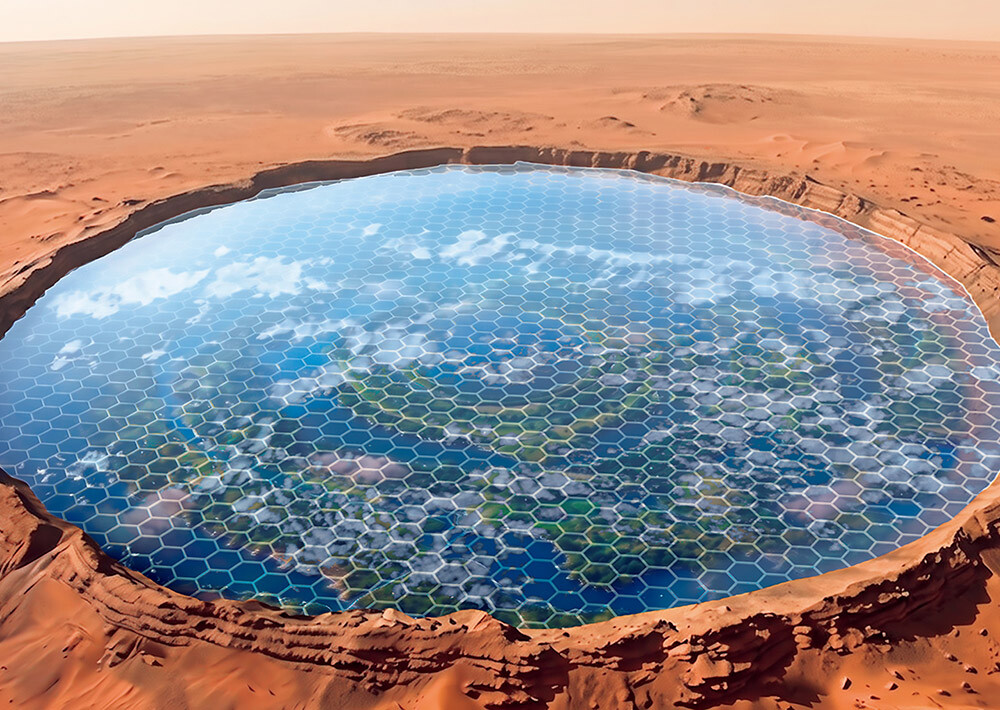
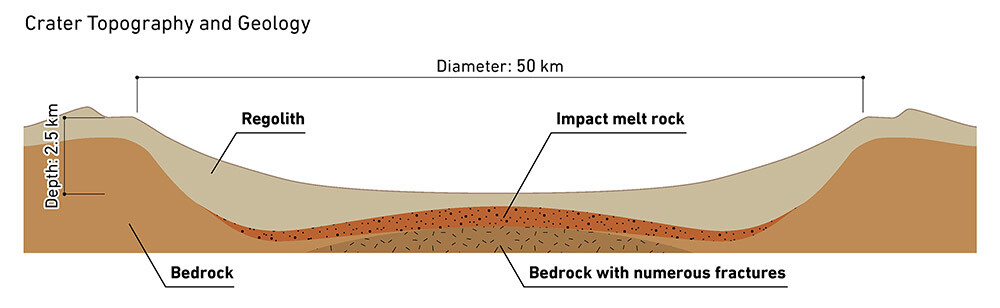
Based on the conditions described above, the criteria for selecting candidate sites were established. As for the crater size, a crater measuring roughly 50 km in diameter and 2.5 km in depth was adopted as the project's standard model, using it as the basis for further analysis of paraterraforming. In terms of surface area, the enclosed space would be roughly comparable to Tokyo Bay.
In establishing this model, we drew upon statistical indicators concerning crater dimensions and depths from previous studies. Although crater depth is influenced by the hardness of underlying bedrock and the degree of subsequent erosion, this project assumes a crater whose floor has been flattened through long-term weathering processes.
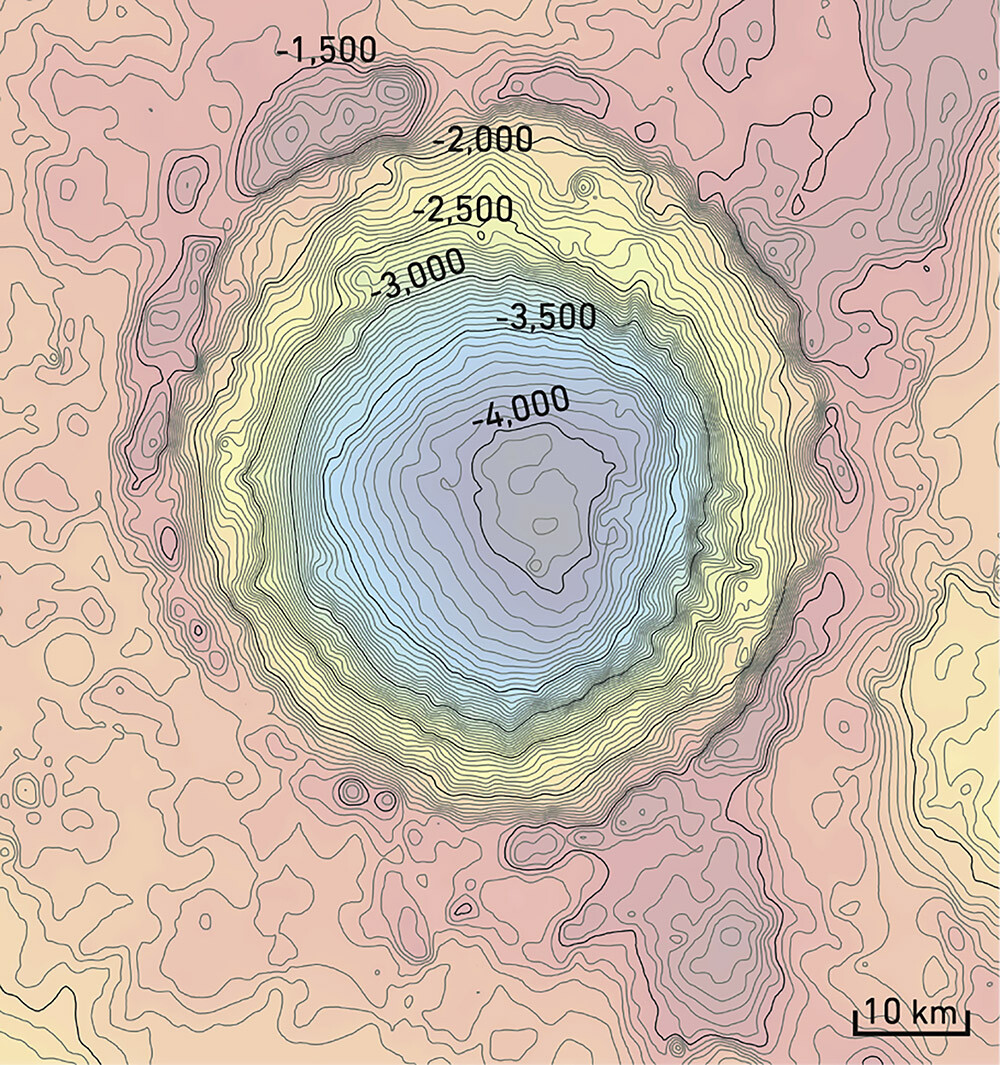
The crater's cross-sectional geometry was likewise determined on the basis of prior research in order to ensure structural plausibility. Located near 27 degrees north latitude and 12 degrees east longitude, a crater adjacent to Maggini Crater can be cited as an example of an actual landform with a configuration similar to our model. According to structural simulations, the canopy would be installed horizontally, with its highest point rising 2.5 km above the crater floor. The canopy itself would measure only 16 m in thickness. Relative to the immense scale of the structure as a whole, the membrane would be extraordinarily thin—comparable to the delicate film of a soap bubble. Within this enclosed environment, lakes, rivers, forests, and grasslands would be positioned to establish a complete ecosystem capable of supporting human habitation.
*5 The regolith on the surface of Mars is extremely fine-grained and can be readily lifted even by weak winds, often developing into dust storms. Mars also experiences westerlies similar to those on Earth, and regions prone to dust storm formation tend to shift in tandem with these westerlies. During the autumn and winter seasons, when the westerlies strengthen and migrate southward, planet-encircling dust storms can occur, sometimes enveloping Mars for periods ranging from several weeks to several months.
Civil Engineering Works
Before the canopy can be installed, the crater must first be transformed into a sealed "vessel" capable of retaining an atmosphere. It is in this phase that Obayashi's civil engineering expertise comes fully into its own.
The construction environment is exceptionally severe. Gravity is approximately one-third that of Earth, the atmosphere consists primarily of carbon dioxide and is close to a vacuum, and surface temperatures average around -63 ℃, while temperatures several meters below ground reach around -30 ℃.
Paradoxically, however, these extremely low temperatures also offer an advantage, as they can be utilized for the freezing technique described later. The crater's geology consists of a three-layer structure. The uppermost layer consists of unconsolidated detritus known as regolith, formed by the accumulation of breccia, sand, and dust ejected during meteorite impacts. Beneath this lies impact melt rock, formed when the energy released by meteorite impacts melts the bedrock, causing it to flow and then solidify upon cooling, resulting in a dense, impermeable layer in some areas. The deepest layer consists of bedrock with numerous fractures caused by meteorite impacts, including fractures into which melt rock has intruded. Based on an understanding of this three-layer structure, the construction plan began with the question of how to ensure airtightness.
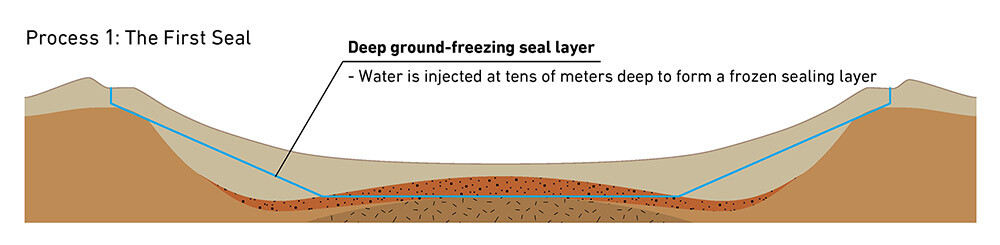
The first step is the installation of a double-layer sealing system to ensure airtightness.
The first is a deep ground-freezing seal layer. At depths of several tens of meters beneath the crater floor, subsurface ice is heated using electrical power and melted into water. Vertical boreholes are then drilled to the required depth, into which insulated pipes are inserted to inject the water into fractures within the bedrock. The injected water rapidly freezes as it loses heat to the surrounding rock. By repeating this process, a continuous ice-based sealing layer is formed. This approach adapts techniques such as ground freezing, chemical grouting, and rock mass grouting used in terrestrial construction. The impact melt rock present in the deeper sections of the crater, where fracturing is limited, is also utilized as a natural impermeable layer.
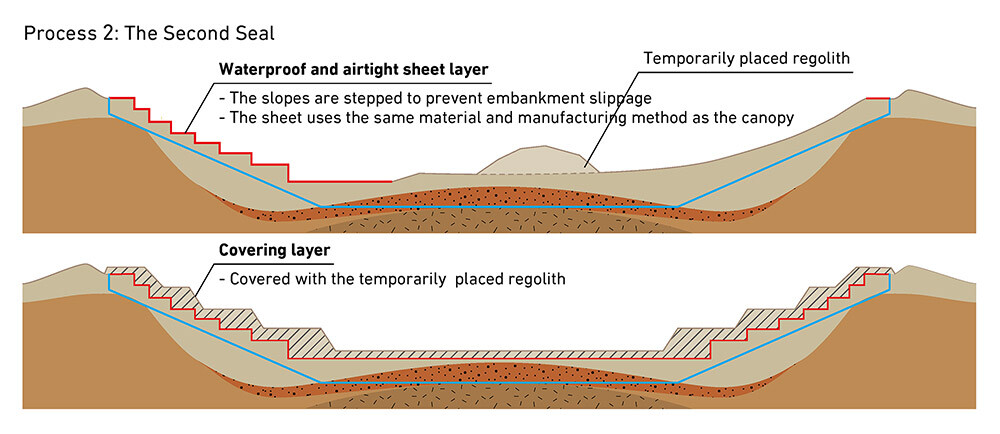
The second seal is a waterproof and airtight sheet layer installed on the ground surface. The steeply sloping crater sides are regraded into a stepped formation to prevent the airtight sheet and embankment material from sliding down, and an ethylene tetrafluoroethylene (ETFE) sheet—also used as the canopy material—is installed over the entire surface. Approximately 10 m of regolith, previously excavated and temporarily stockpiled, is then placed over the sheet across the crater floor and slopes. This covering layer will later serve as the foundation for soil development and vegetation.
In this way, a dual structure comprising a deep ground-freezing seal layer and a waterproof and airtight sheet layer on the ground surface ensures that the atmosphere within the canopy does not leak into the subsurface.
[The Processes of Civil Engineering Works]
Constructing the Canopy
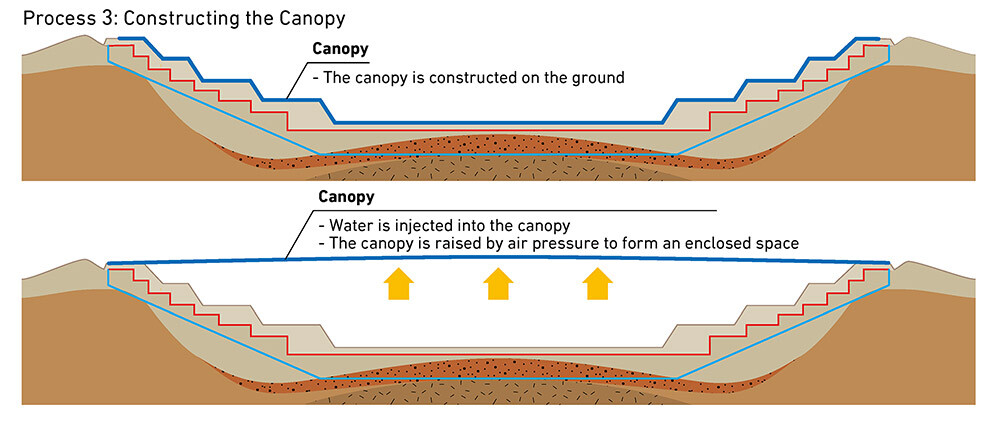
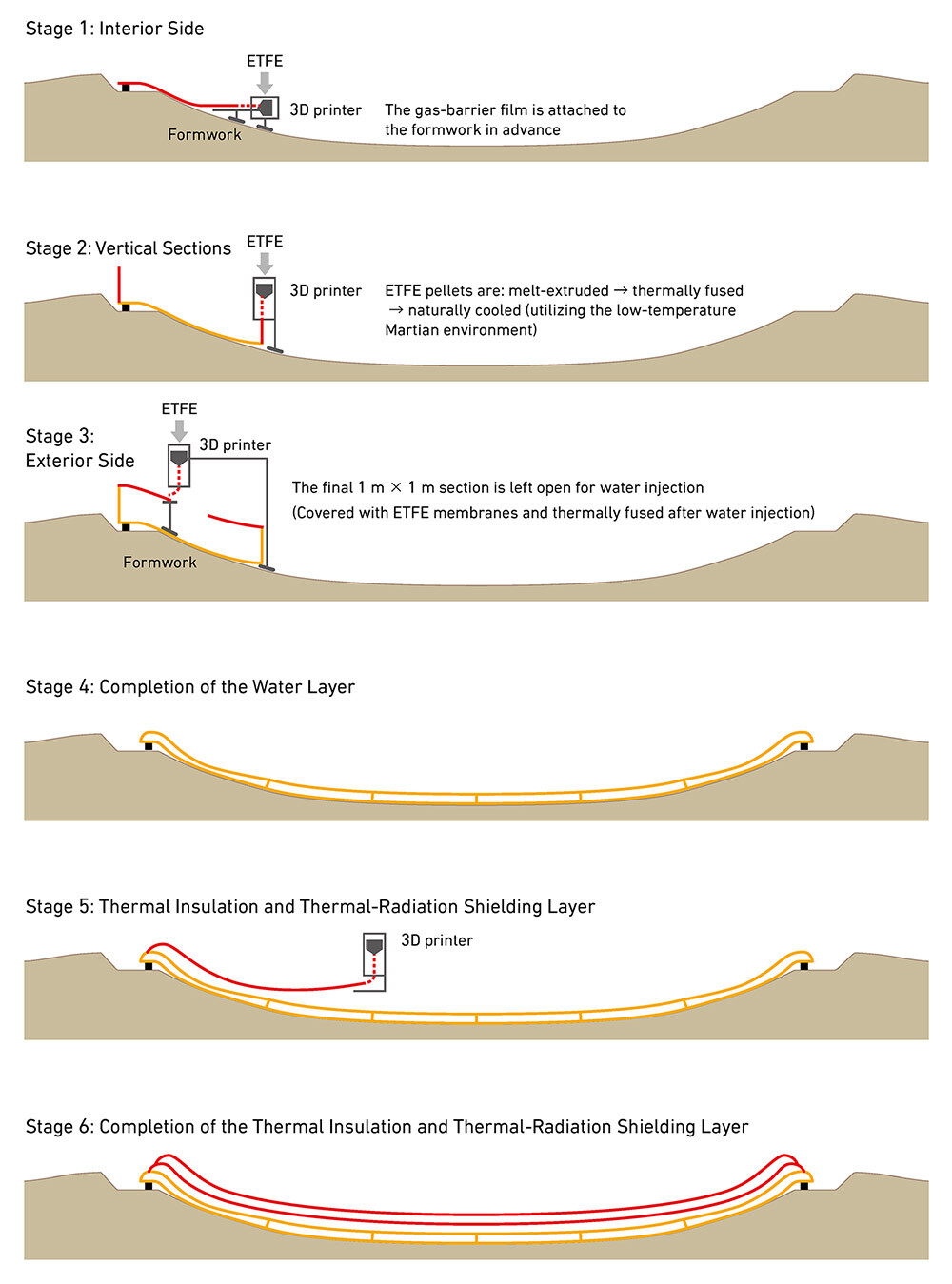
The canopy is to be made of ETFE described earlier. This fluoropolymer offers excellent transparency, flexibility, weather resistance, flame resistance, and durability against ultraviolet radiation. Its greatest advantage, however, is that the fluorine and carbon required for its production can be obtained from resources available on the Martian surface, allowing the material to be manufactured locally using 3D printers. In addition, when ETFE pellets are melted and thermally fused to form membranes, the extremely low ambient temperatures allow natural cooling without the use of water, while the near-vacuum atmosphere contributes to producing membranes of greater transparency than those manufactured on Earth.
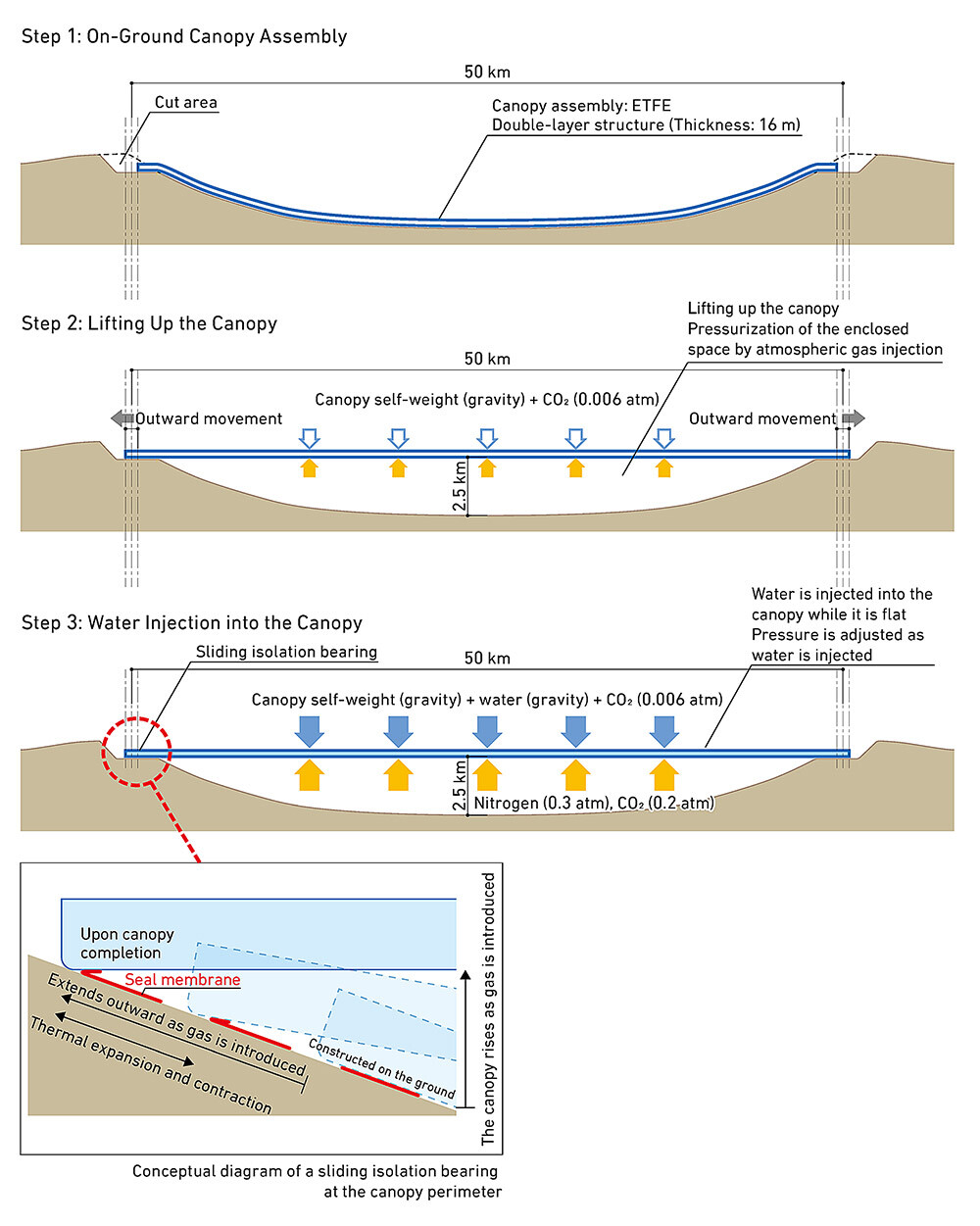
The canopy consists of a double-membrane water layer together with thermal insulation and thermal-radiation shielding layers, with a total thickness of 16 m. Between two roughly 10 mm-thick ETFE membranes, a 14 m-deep water layer is injected. This water layer performs three important functions. The first is shielding against cosmic radiation, protecting humans and other living organisms within the enclosure. The second is balancing the canopy's weight, with the water functioning as ballast to balance internal pressure against the canopy's self-weight. By varying the thickness of the water layer from one location to another, the weight balance across different portions of the membranes can also be finely adjusted. A concave canopy shaped to follow the crater topography would not become horizontal even if force were applied uniformly throughout. By varying the depth of the water layer and adjusting the distribution of forces acting upon the canopy, the structure is gradually transformed from a concave configuration into a final horizontal form. The third function is the suppression of static electricity. While resin membranes readily accumulate electrostatic charge, contact with water prevents such buildup.
[Cross Section of the Canopy]
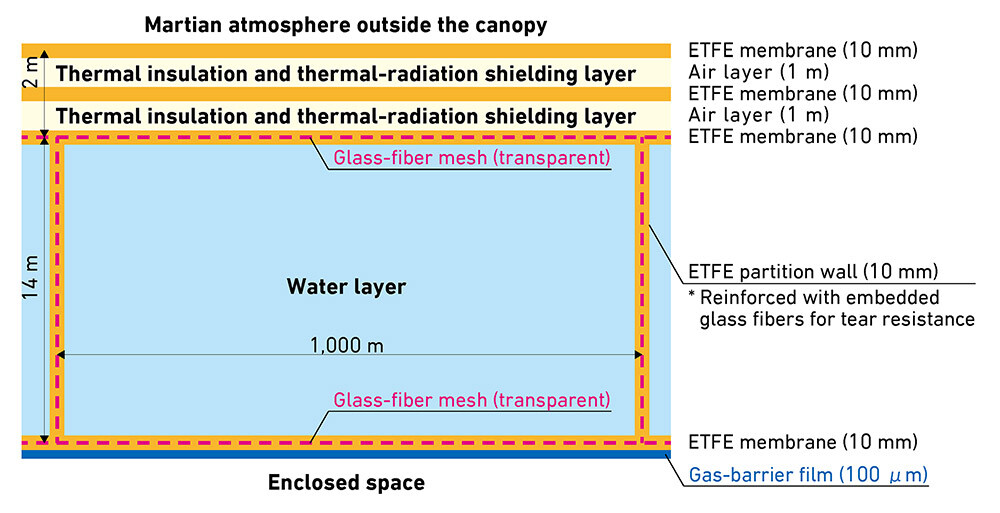
A glass-fiber mesh is embedded within the ETFE membranes. This reinforces ETFE's relatively low tear resistance while still allowing light transmission owing to its transparency. Moreover, by transmitting and emitting light internally, it also contributes supplementary illumination for plant photosynthesis. At the uppermost portion of the canopy, two air layers are created as thermal insulation and thermal-radiation shielding layers. These prevent internal heat from escaping during nighttime and winter conditions while also helping to prevent the water layer from freezing. A gas-barrier film approximately 100 μm thick is applied to the inner surface of the canopy to prevent oxygen within the enclosure from escaping outward. Should damage occur, the canopy can be repaired easily by applying ETFE membrane patches and thermally fusing them into place.
The water layer's double membranes are divided by partition walls into multiple units. Each unit takes the form of a hexagonal prism, together forming, when viewed from above, a honeycomb structure with sides measuring 25 m in length. By compartmentalizing the units in this manner, any damage that may occur can be confined to the affected unit alone.
Construction of the canopy proceeds in six stages. First, formwork is installed on the crater floor, and 3D printers are used to fabricate the interior-side ETFE membrane. After spraying the gas-barrier film onto the formwork, ETFE pellets are melt-extruded and thermally fused together to form the membrane. The double-membrane structure is then assembled in sequence from the interior side, vertical sections, and exterior side, leaving openings for subsequent water injection. Next, thermal insulation and thermal-radiation shielding layers are laminated onto the uppermost surface of the canopy using 3D printers.
With the canopy units completed, the lift-up process begins. First, the canopy is assembled on the ground in a configuration corresponding to the topography of the crater floor. Carbon dioxide from the Martian atmosphere is then fed into the space beneath the canopy and pressurized, lifting the structure vertically upward. At this stage, the carbon dioxide pressure is only approximately 0.007 atmospheres. However, because the self-weight of the canopy itself is extremely small before water is injected, the upward force generated by this pressure alone is sufficient to lift the canopy. Once the canopy has reached an approximately horizontal form, water is injected into each compartment of the double membranes. While balancing the weight of the water against internal pressure, the internal atmosphere gradually increased to 0.5 atmospheres, completing the enclosed environment. Finally, the water injection openings are sealed by thermal fusion of ETFE membranes.
To inflate the canopy from the crater-shaped ground surface into an almost horizontal configuration, a non-uniform weight distribution is required, optimized according to local topographic conditions. Even in cases where the crater is not perfectly concentric and the deepest point is offset from the center, such variations in terrain can be addressed by adjusting the distribution of injected water. At the same time, because the canopy is not fixed around its outer perimeter, accommodating expansion and contraction at the edges presents a significant technical challenge. As the canopy is lifted from the surface, the central portion rises by as much as approximately 2.5 km, while the perimeter expands horizontally outward by roughly 200 m. Even after completion, temperature fluctuations are expected to produce displacements on the order of several tens of meters. To address this issue, the ground surface around the perimeter is shaped in advance so that the curvature at the edges becomes as gradual as possible, allowing the entire outer edge of the canopy to function in a manner similar to a sliding isolation bearing (*6) and thereby avoiding excessive restraint of horizontal deformation.
According to current simulations, construction of the canopy, including the associated civil engineering works, is expected to require roughly 100 years.
*6 A device that reduces seismic motion transmitted to a structure by allowing sliding elements to move during an earthquake
[Canopy Unit Construction Process]
[Canopy Unit Lift-Up Process]
- The first page
- Previous page
- page 1
- Current page: page 2
- page 3
- page 4
- page 5
- 2 / 5
- Next page
- The last page
The issue this article appears
No.65 "Earth"
The earth nurtures life and sustains the rich natural environments that surround us. We live each day benefiting from its blessings. How did the earth come into being? And is there land on planets beyond Earth?
This issue explores the diverse and colorful landscapes found around the world and the ways in which they are intertwined with people’s lives. We also trace the geological processes that have shaped these distinctive landscapes. In the Obayashi Project, we took on the ambitious challenge of conceptualizing the creation of habitable terrain and the development of an environment capable of sustaining life inside a Martian crater.
We reflect on the richness and significance of the natural world nurtured by the earth and turn our thoughts to the future of our planet’s environment.
(Published in 2026)
-
The Colors and Expressions of the Earth
- View Detail
-
Earth's Soil and Planetary Soil
FUJII Kazumichi
(Unit Leader, Soil Homeostasis Research Unit, Fukushima Institute for Research, Education and Innovation) - View Detail
-
Who Owns Land in Space?: Rethinking the Ethics of Terraforming
MOTOMURA Yukiko
(Special Visiting Professor, Faculty of Life and Medical Sciences, Doshisha University; Guest Editor, The Mainichi Newspapers Co., Ltd.) - View Detail
-
Terraforming: Ecosynthesis and Ecological Restoration on Mars
Christopher P. McKay
(Planetary Scientist; Senior Scientist, NASA Ames Research Center) - View Detail
-
OBAYASHI PROJECT
Creating Habitable Terrain on Mars: Crater Paraterraforming
Concept: Obayashi Project Team
- View Detail
-
Dreams of the Red Earth: Five Hundred Years of Martian Settlement
TAKEUCHI Kaoru
(Science Writer; Professor, Faculty of Social Informatics, ZEN University) - View Detail
-
The "Earthen Houses" of Iceland
FUJIMORI Terunobu
(Architectural historian and architect; Director, Tokyo Metropolitan Edo-Tokyo Museum; and Emeritus Professor, University of Tokyo) - View Detail
-
The Earth's Memory: Landscapes Shaped by Nature and Human Life
- View Detail